
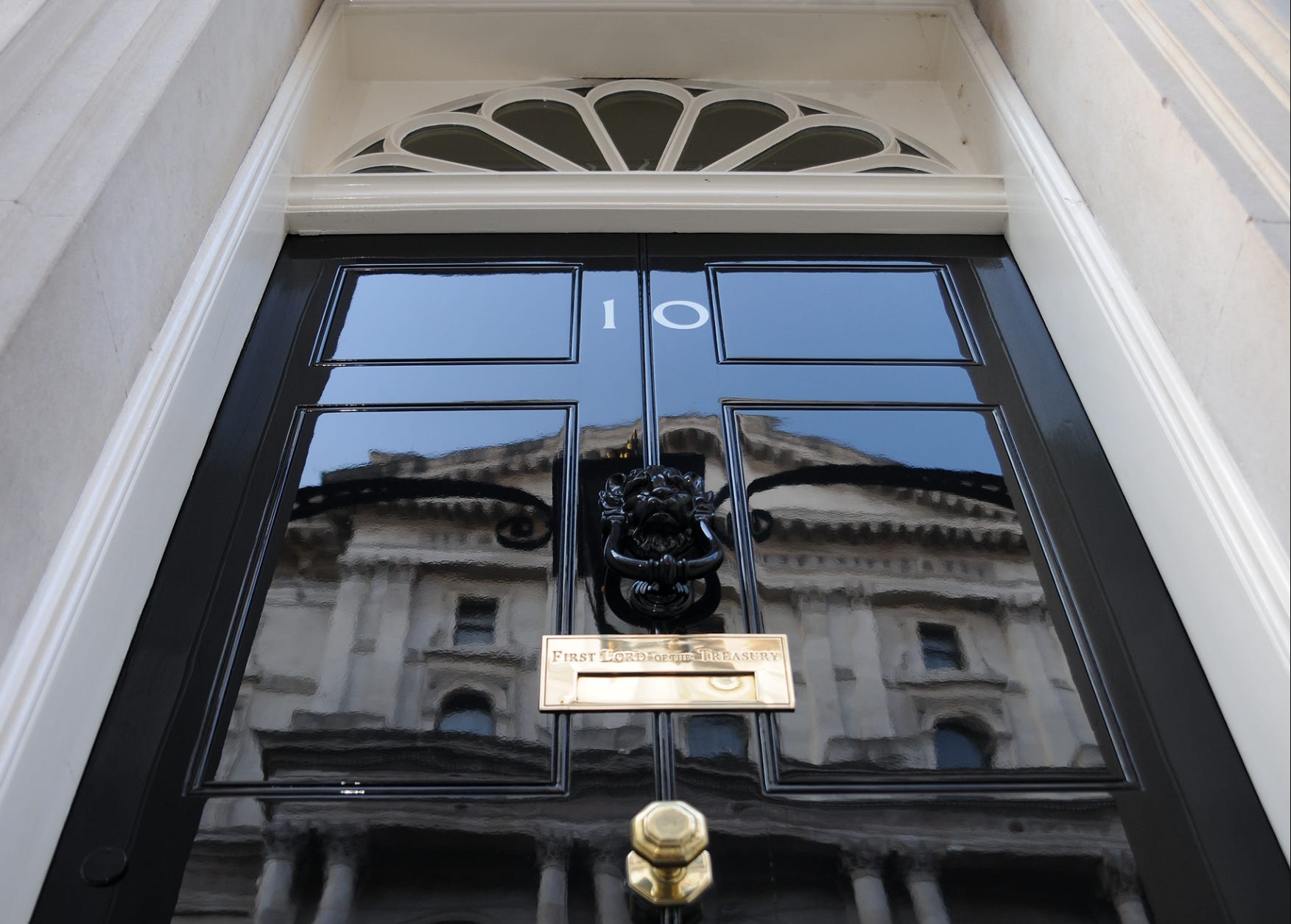
Nominations in the Labour leadership contest open today and Andy Burnham’s path to the top now appears clear. As his potential rivals melted away in the UK’s blistering heat, attention has already begun to shift from the contest itself to the transition, with Burnham reportedly holding talks with Keir Starmer about how power can be handed over smoothly.
His team will now be turning their attention away from campaigning and towards a more consequential challenge: what to do with the power they are likely to inherit. Given the domestic, geopolitical and fiscal constraints they face, it is hardly an enviable task.
Thanks for reading! Subscribe for free to receive new posts and support our work.
A sketch of what ‘Mancherism’ writ large might look like came into focus last month as Mainstream published a new paper – The Productive State. Written by researchers at Common Wealth, it takes a closer look at how Burnham’s economic programme could be applied to national industry. We’ve also seen glimpses in recent weeks of his willingness to continue with the bulk of Shabana Mahmood’s asylum reforms, his commitment to the fiscal rules, and his plans, as laid out in The Times today, to rebuild Britain’s hard power — as well as a great deal of speculation and debate about what he could be doing in his first 100 days in office.
Yet one of the most important questions remains unanswered. As is so often the case with incoming administrations, the challenge is not simply what they intend to do, but how they intend to do it. Policy and rhetoric will only get Burnham so far. Genuine delivery rests on grappling with an altogether different question: how to transform the state itself.
As The Future Governance Forum has consistently highlighted, the modern British state has become an obstacle to delivery in its own right. Any well-intentioned legislative push to renew the nation — even in more benign political circumstances than these — will inevitably come into friction with the outdated machinery of government at all levels. Modernising it will require fundamental transformation of the state, and that requires political will and institutional bravery.
Encouraging signs
There are encouraging signs that Burnham is up for the challenge. Already he has appointed his old political ally James Purnell as his Chief of Staff to help implement his ‘radical plans to overhaul Whitehall and Downing Street’. These are, of course, early signs not extensive blueprints, but it does at least point to a willingness to engage with the serious questions of governance.
Nor will Burnham’s team be starting from scratch on this question. The previous administration began making headway, acting on recommendations put forward by FGF to improve the way the centre of government works.
And we now have a clearer sense of the direction of Antonia Romeo’s civil service reform programme. Her wide-ranging review of the civil service will examine everything from its size, shape and structure, to the role of AI and technology, performance management, capability, accountability and recruitment, with the aim of producing a vision for a more effective, delivery-focused state. Alongside the review itself, work is already underway to improve delivery, accountability, innovation and productivity across Whitehall, which will provide Burnham’s team with a solid foundation on which to build.
But the task is far from over. The new administration will need to continue rethinking and rebuilding the state’s capacity to deliver results that people notice, and that impact upon their daily lives. Done right, this could help repair our broken social fabric, and rebuild confidence in our elected officials.
Our seven principles for transforming the state
Transforming the state won’t be easy – but it is possible. With the right political will and a genuine intellectual curiosity about the business of governing, Burnham’s team could make real, long-lasting progress. To do so, there are seven key principles which I set out in my inaugural Addison lecture at the beginning of June that they ought to consider.
The first principle is the urgent need for government to act as both an orchestrator and a storyteller. Contemporary policy challenges are much too complex for central government to hope to solve alone. They need to harness the expertise and resource held within different sectors across the country to build a state resilient to the types of challenges we face in modern Britain. Government should set a clear narrative and a direction for the country. But national momentum should come from more active collaboration.
The second principle is that government should seek to disrupt policy and the workings of the state when necessary. To be absolutely clear, this does not mean adopting the scorched-earth, ‘disrupt and destroy’ tactics piloted by Elon Musk and his so-called ‘Department for Government Efficiency’. Instead, it means government should ‘disrupt and deliver’. That means breaking with the incrementalist and risk-averse norms of civil service behaviour and creating a culture in which there is a willingness to act under uncertainty.
The third principle is that the machinery and mechanics of the state must be better aligned with the policy outcomes they are trying to achieve. In other words, institutional design must sit downstream of institutional function. The modern British state resembles one of Dr. Frankenstein’s creations: stitched together by too many legacy arrangements – at the centre, in departments, hidden away in arms length bodies – which were set up for past, not current, challenges – let alone future ones. Too often this means delivery is undermined, decision-making slows down, and trust is eroded.
The fourth principle is simple: effective government relies on clarity. This applies not just to communications – although of course this is vital. It means having clarity over the ways in which responsibility, accountability and intent are understood across government. Currently, across too many manifestations of the state, at all levels and in all geographies, responsibilities are unclear and overlapping, with too many actors involved, but without owning any outcomes. The result of this is drift, inefficiency, and ultimately, a failure to deliver.
The fifth principle is about changing the culture of government. Currently, the culture at the centre of government is too often, too closed. There’s an over-reliance on familiar voices, and weak engagement with external expertise which stifles innovation and new forms of collaboration. Transforming how government behaves once in power is just as important as thinking about what they want to do with that power in the first place.
And of course, culture runs through all of the themes discussed above. Coordination across and beyond the state fails without collaborative norms; innovation fails without an openness to risk; institutional reform fails if behaviours are too cemented; and clarity fails if a culture of accountability is neglected.
The sixth principle is the well-trodden concept of long-termism. In recent years, service delivery has struggled against a current of reactionary decision-making and piecemeal responses to hard problems have become the norm as the country has faced an unprecedented level of ministerial and leadership churn. The UK’s most pressing challenges cannot be solved within short political or fiscal cycles, but currently the state reinforces, rather than challenges these behaviours. Breaking from this unhelpful orthodoxy will require a fundamental shift in how the state is organised, how resources are allocated, and how success is evaluated.
The seventh and final principle — which underpins them all — is leadership. To tackle the range of complexity facing any government, at any tier, we need a different type of leadership across government. One that is adaptive, not technical. One driven not by positional authority where it is assumed that those at the top have all the answers. But a type of leadership where government orchestrates, corrals, and mobilises others in the system around shared goals. Too often we talk about the state, government and institutions as if they are inanimate objects, but they are ultimately operated by people. Leadership is an act, not a role, and it’s only by the state — at all layers — valuing, nurturing and rewarding greater capability for adaptive leadership that we will start to see change that people can feel.
With the energy and optimism of Starmer’s landslide victory in short supply, Burnham has just three years to make radical change if he hopes to secure Labour a second term. To do so, he will need to give serious consideration to the mechanics of how to transform the state to renew the nation – and do it fast.
Thanks for reading! Subscribe for free to receive new posts and support our work.