Autumn seemed to arrive dramatically this year. After a long hot August, September came with a sharp drop in temperature and heavy rain. Schools are back, leaves are falling and the holidays feels like a lifetime ago. Without overegging the metaphor, it’s hard not to feel a similar dynamic within British politics: after the heady summer that followed Andy Burnham becoming Prime Minister, it’s now time for the hard yards of governing.
The Prime Minister and his team used that honeymoon period effectively, though. Alongside moves to give people ‘breathing space’ in their family finances, there were big announcements around rewiring the state, including the creation of the new Office of the Prime Minister and the Cabinet, and going further and faster on devolution — pushing power out of Westminster and Whitehall, and around the country.
This is hugely welcome. FGF’s mission is to transform the state to renew the nation, and that’s exactly what Andy Burnham is doing: understanding that you can’t achieve the latter unless you do the former. Changing the operating model of government isn’t a technical fix that can wait until you have made your way through the seemingly endless in-tray of other things that need to be done first. It’s the essential precursor to delivering a progressive political programme.
But the government now needs to build on those foundations, and that is going to involve navigating trade-offs and tensions: where to break from the last two years of the Starmer administration, and where to continue its work. The Prime Minister will need to be crystal clear about his purpose — giving a clear north star around which not just politicians and civil servants, but businesses, civil society, the wider public sector and others can orient themselves; to have a clearly defined theory of power — identifying both where it is too concentrated and too diffuse, and having a plan to redistribute it; and to put flesh on the bones of his place agenda — how exactly the significant next wave of devolution will be a means to better outcomes in people’s lives, and not just an end in itself.
Those three elements are at the heart of our packed 2026 Party Conference programme, which kicks off this weekend in Brighton with the Liberal Democrats. Then the weekend after we’ll be in Liverpool with Labour, where we’ll hear from speakers including AI Minister Kanishka Narayan, Mayors Steve Rotheram and Claire Ward, Rail Minister Lord Hendy, former Deputy Cabinet Secretary Helen MacNamara, and many more. Check out the full programme and all confirmed speakers – with more to come – below.
Our Party Conference event programme follows the Westminster drinks reception we held last week in partnership with Inflect, where we were delighted to be joined by Chief Secretary to the Treasury Emma Reynolds. Thanks to all who joined us there for a wonderful start to September, and we look forward to seeing many more of you in Brighton and Liverpool in the weeks to come. It’s going to be a busy autumn…
Adam Terry
Executive Director, The Future Governance Forum
Liberal Democrat Conference
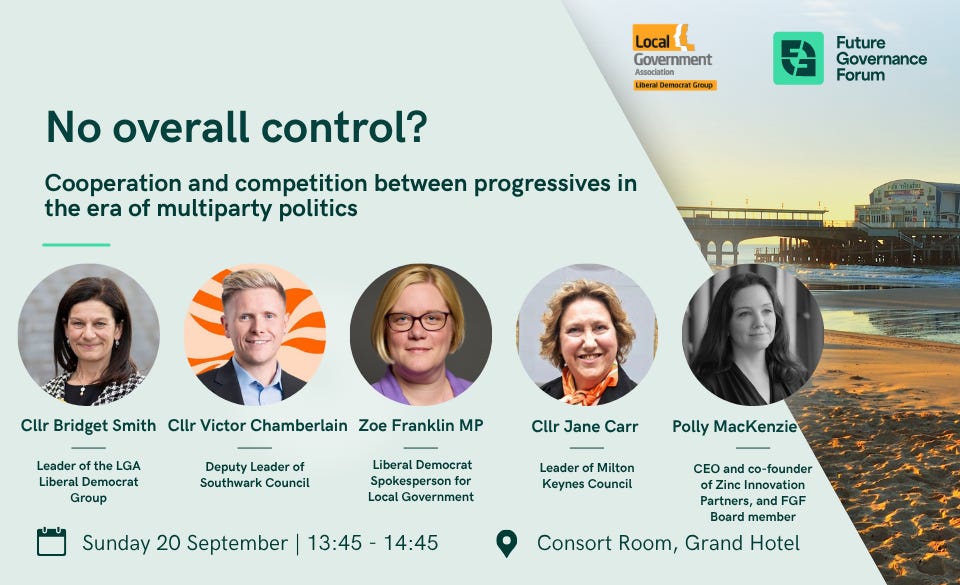
Sunday 20 September, 13:45 – 14:45
With multiparty politics now the norm and a 2029 hung parliament possible, this LGA Liberal Democrat and FGF event asks where Liberal Democrats should challenge or collaborate with other parties, and how they can position themselves against the populist right.
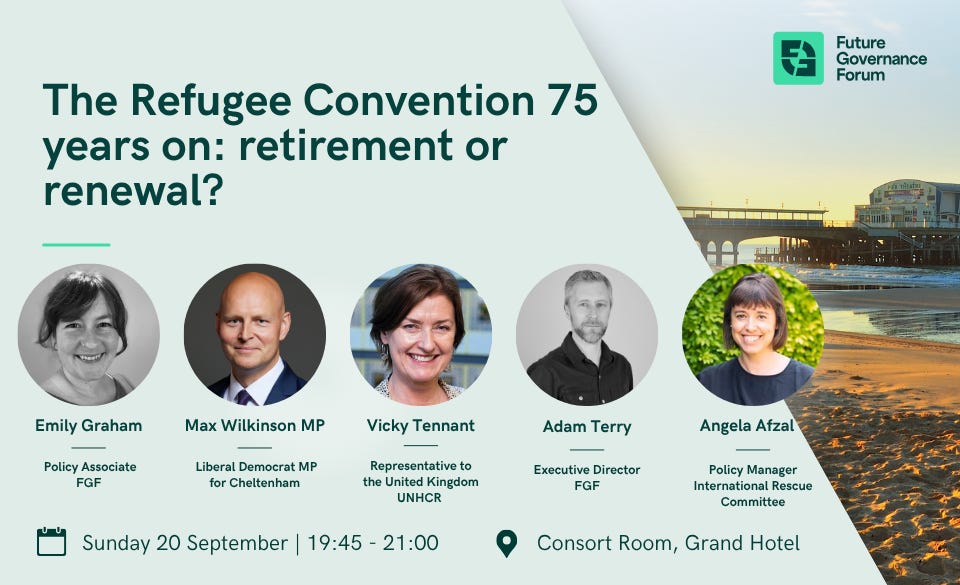
Sunday 20 September, 19:45 – 21:00
As the global consensus on refugee protection comes under strain, this event explores the Refugee Convention’s continued relevance in today’s connected, unstable world. Join us to consider how governments can uphold their international commitments while restoring public trust in asylum.
Labour Conference
Sunday 27th September
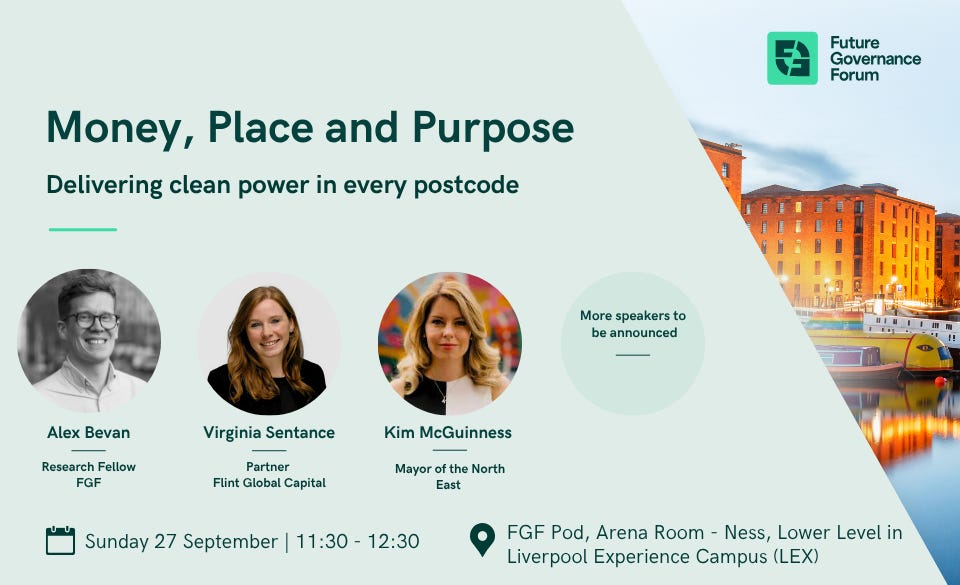
Sunday 27 September, 11:30 – 12:30
Andy Burnham assumes power at a crucial time for the clean energy agenda: needing to consider how to raise the finance needed, how to involve people and places, and how to tell a compelling political story. This event will bring together high profile political and sector voices to explore how clean energy can cut living costs and build stronger local economies.
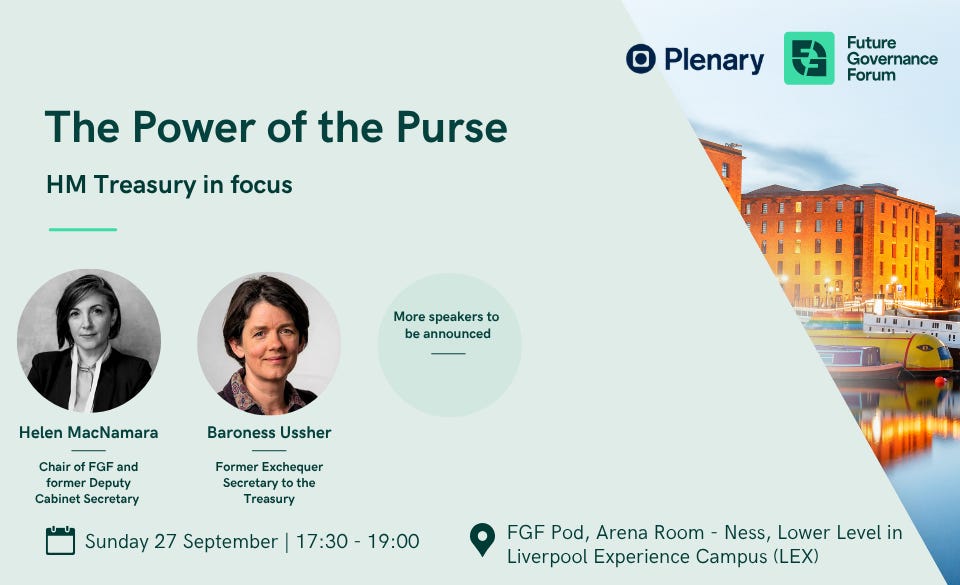
Sunday 27 September, 17:30 – 19:00
The Treasury sits at the heart of the UK’s economic model and system of government. Yet to many, it is something of a black box; its inner workings and power dynamics a mystery. In conversation with Treasury figures past and present, we’ll discuss how HMT decides what gets funded across Whitehall, and how it uses its power to build a stronger, fairer economy. The event will also be followed by a drinks reception so please do stick around.
Monday 28th September
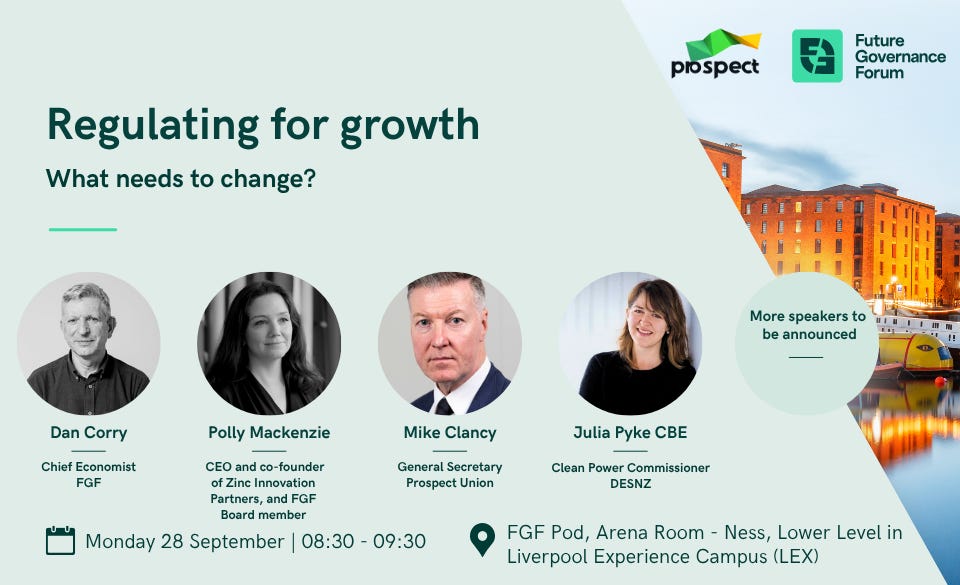
Monday 28 September, 08:30 – 09:30
Boosting growth remains a core priority for government – but too often regulators are treated as a barrier to this. This event will explore how government can rethink its approach; empowering regulators to drive innovation through stronger internal cultures and talent, effective collaboration, and the right balance with political accountability.
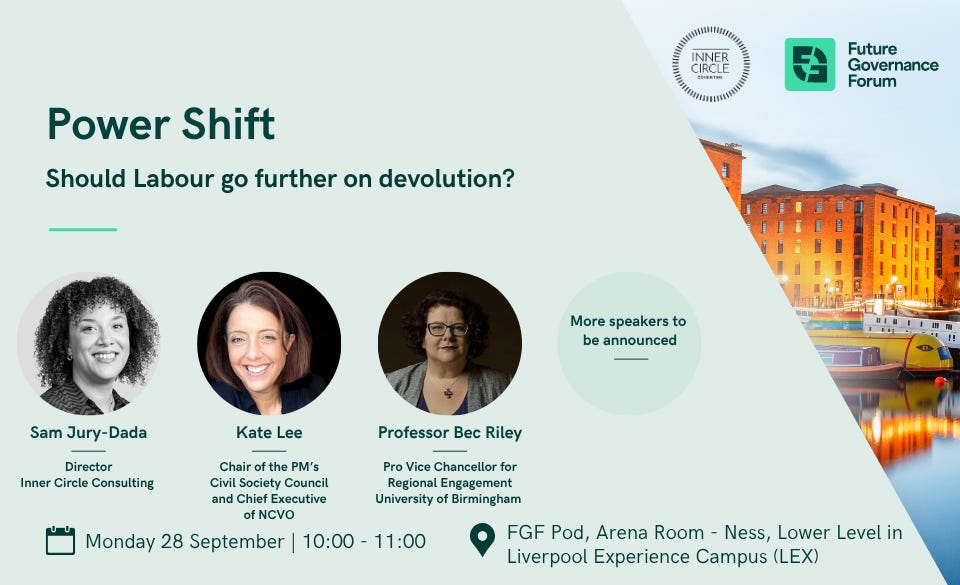
Monday 28 September, 10:00 – 11:00
The new Prime Minister has set a clear political direction behind devolution – ‘taking power out of the centre and putting it in the hands of the people and places who can use it best’. Join us to hear from people with the insight and experience of regional government to discuss what this promise could mean in practice.
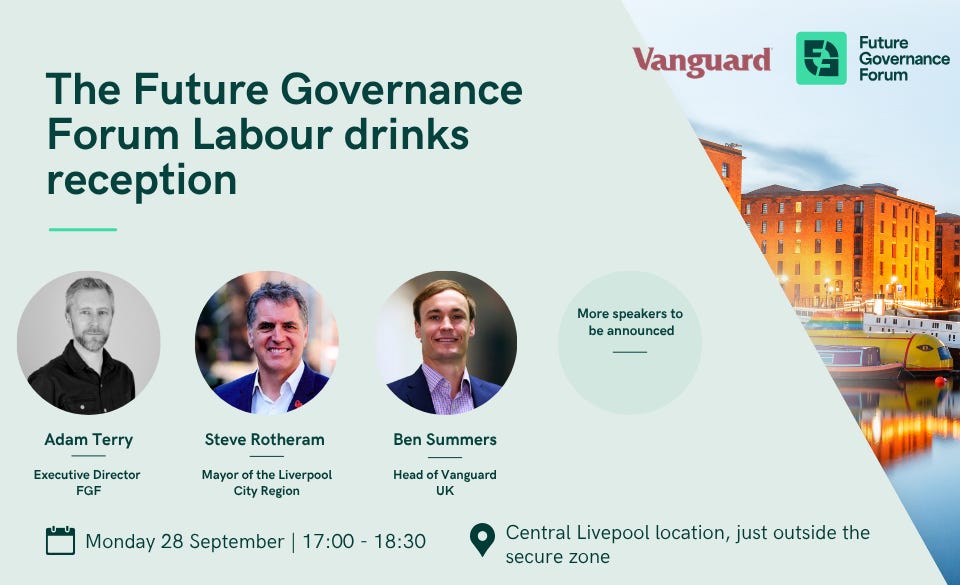
Monday 28 September, 17:00 – 18:30
Kindly supported by Vanguard, this year’s reception will look ahead to the next phase of the Labour government and explore how the new Labour administration can transform the state and economy to renew the nation. Please note: this event is invitation only.
Tuesday 29th September
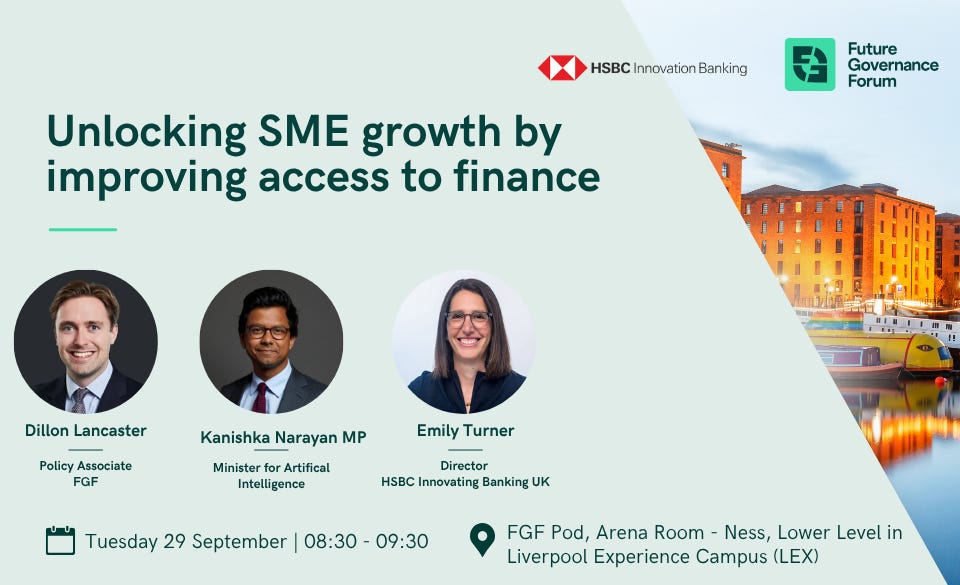
Tuesday 29 September, 08:30 – 09:30
Too many of Britain’s female, ethnic minority, disabled and working class entrepreneurs are ‘underinvested’: unable to access the finance needed to start or scale a business. To mark the launch of new FGF research sponsored by HSBC, this session will discuss practical policy solutions to break down barriers and unlock economic potential.

Tuesday 29 September, 10:00 – 11:00
On immigration and asylum, the new Prime Minister must address public concern without fuelling division, and offer a credible approach that is both workable and politically resonant. This joint event will explore how to build an authentic Labour approach that commands public support, and can navigate the political risks and opportunities involved.
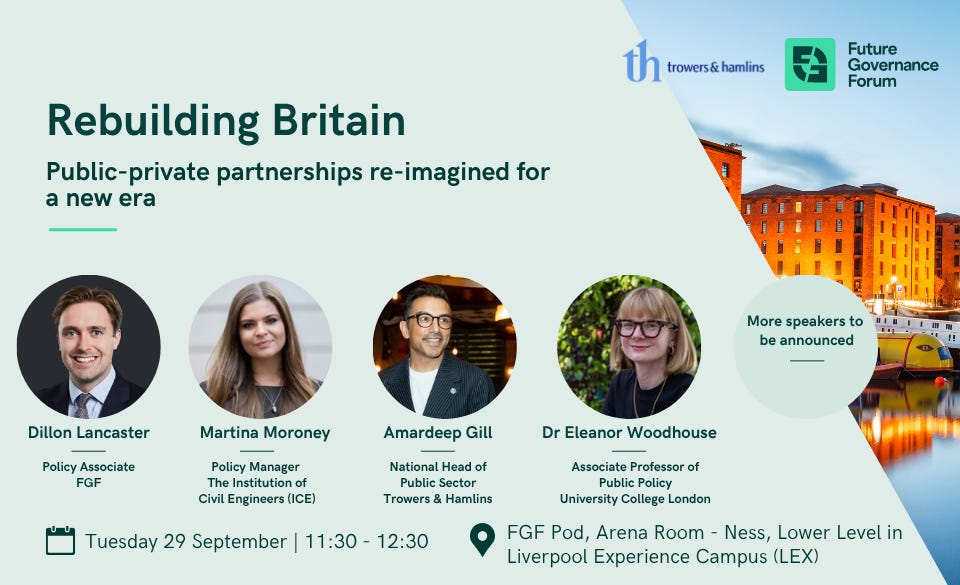
Tuesday 29 September, 11:30 – 12:30
In a constrained fiscal environment, this session asks how new private finance models can help build the infrastructure the UK needs. Drawing on emerging policy, international experiences and pilots, we’ll explore how public-private partnerships can be designed to deliver value for money, public benefit and long-term growth.
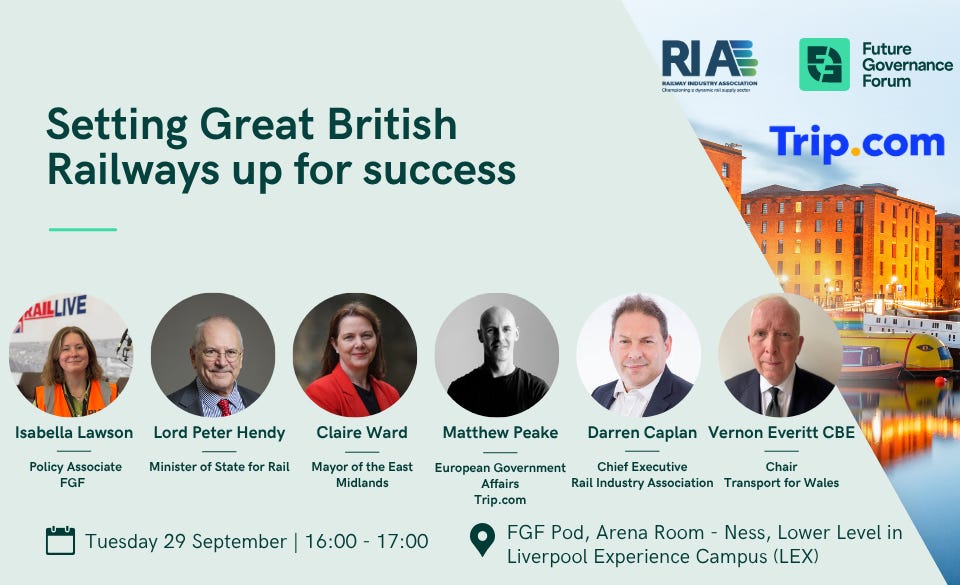
Tuesday 29 September, 16:00 – 17:00
Rail nationalisation and the creation of GBR is one of this government’s most popular policy moves. The stakes are high: GBR’s performance will be seen as indicative of wider government success or failure. This event will explore how GBR can be established as a strong, enduring institution that delivers for society and the economy.
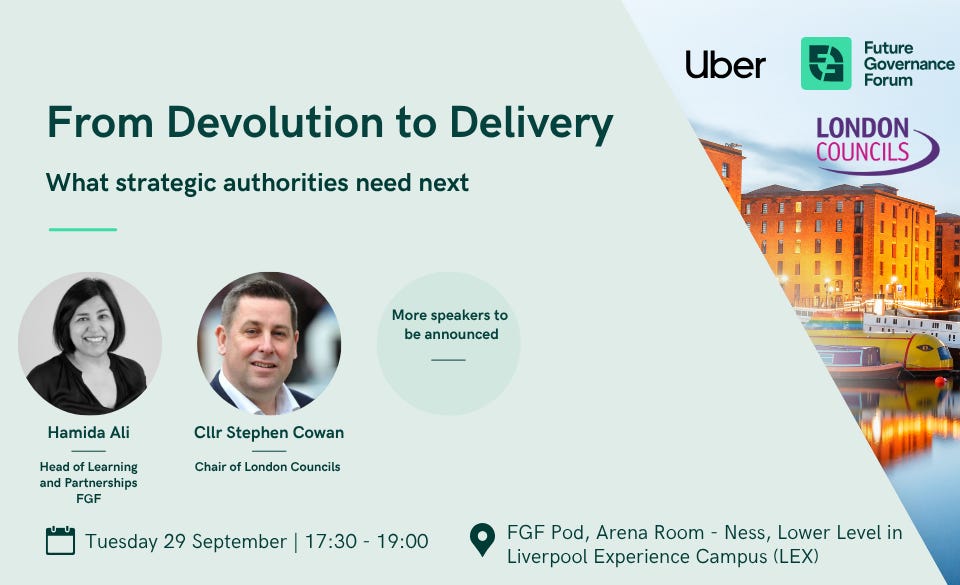
Tuesday 29 September, 17:30 – 19:00
Labour’s English devolution agenda is set to accelerate under the new Prime Minister, which could include a new devolution deal for London. In partnership with London Councils and Uber, this session will bring together people with experience of local and regional government – in London and beyond – to explore how this could improve regional delivery. The event will also be followed by a drinks reception so please do stick around.