By Nathan Yeowell, FGF Executive Director
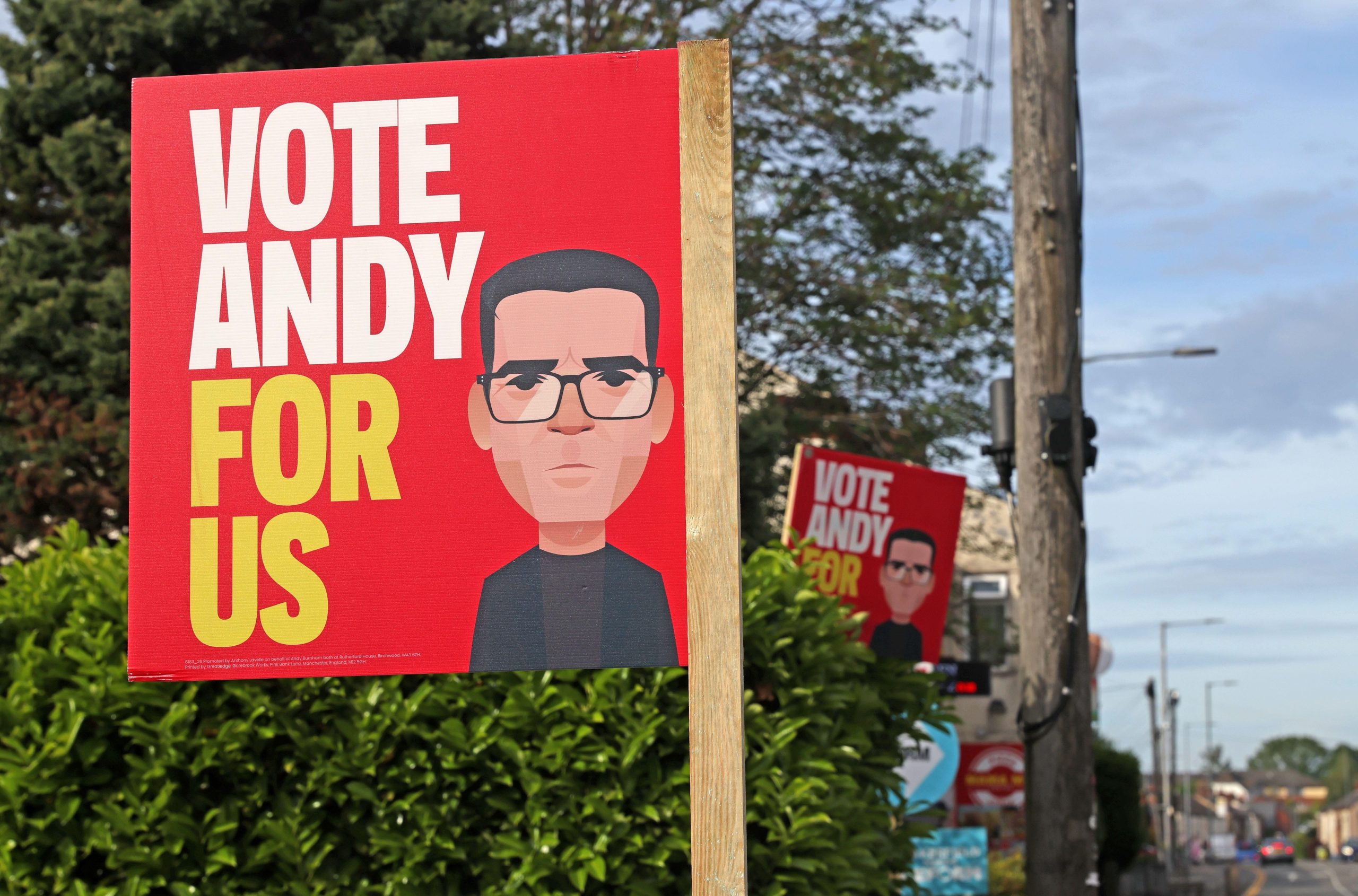
After months of fevered speculation, things are moving. On 22 June Keir Starmer took to the lectern outside Downing Street to announce that he will resign as Prime Minister. Exactly a week later, in the People’s History Museum, Andy Burnham gave the most detailed account yet of his pitch if – as now widely expected – he replaces Starmer on 20 July.
Two Mondays, two cities, two politicians, two speeches – and it seems fitting that it was the politician speaking in Manchester who had the happier Monday.
Starmer’s speech was, unsurprisingly, downbeat and sombre. His premiership has not panned out as he or his supporters would have wished, and has undeniably fallen short of the promise of ‘change’ on which he rose to power. Yet it was also characteristically gracious and decent – a reminder of the man who had stood in that same place two years ago and committed to lead ‘a government of service’.
Burnham’s was, by contrast – and equally unsurprisingly – positive and energetic. That change of tone, of Burnham’s easy everyman compared to Starmer’s aloof technocrat, is one thing the former Manchester Mayor’s team argue will make him a better prime minister. And it’s true, especially in the modern era where charismatic politicians like Zohran Mamdani, Boris Johnson and, yes, Nigel Farage all thrive, that this may carry Burnham a long way.
But it will not be sufficient on its own. Burnham also needs a compelling political vision for the country and a plan to deliver it if he is to avoid falling into the same trap of offering the change voters repeatedly demand before ultimately being seen as of and for a broken status quo. With Reform UK consistently topping the polls, and only three years until the next general election, this is becoming existential for progressive politics.
The Makerfield MP’s speech yesterday gave us a much stronger sense of what that vision and plan might look like. What did it tell us?
First, Burnham’s central diagnosis is correct: we have a longstanding problem in the UK around how we are governed. That is a problem that starts at the very centre, where 10 Downing Street has for years been patched up and held together without anyone taking a properly strategic view as to how it should be constructed and made to work for a modern Prime Minister. Burnham’s proposal to create a new ‘No.10 North’ may raise as many questions as it answers, but his belief that we need a new ‘nerve centre for a rewired Britain’ is spot on. It’s what we argued for in our flagship Transforming Downing Street report last year, and I would urge the next Prime Minister and team to consider its recommendations – not least that No.10 needs a much more intentional politics and strategy function if it is to succeed.
As one might expect from a former Mayor hoping to become Prime Minister, Burnham also made clear that devolution will be a core tenet of his approach. Again, this is absolutely right: we are a highly centralised country with crippling regional inequality, and that is not a coincidence: the former gives rise to the latter. Progressive politicians need to develop a much more rigorous theory of power (as Phil Tinline argued for us earlier in the year), determining where power is overly concentrated and where it is too diffuse, and then redistributing it accordingly. That includes acknowledging where national government itself is hoarding too much power. Burnham’s commitment to ‘bring about the biggest rebalancing of power the country has ever seen’ and make place much more central to our politics is very welcome. One to watch here will be whether the Treasury’s proposed ‘roadmap’ to fiscal devolution, slated for the autumn, becomes more ambitious under a Burnham premiership.
The core tenets of what we might term Andy Burnham’s emerging theory of government – his desire to ‘do things differently’, as Mancunians would have it – are also encouraging. He wants to emphasise the long-term, to end the territorialism and adversarial nature of both Whitehall and Westminster, to build partnerships beyond government so that achieving policy aims is a whole-of-society effort, to be crystal clear on ends while allowing innovation and iteration when it comes to means. You might even (whisper it) call it mission-driven government.
And therein lies the problem with Burnham’s speech, at least while it remains rhetoric and before it starts being put into practice. Much of what the former Mayor of Manchester said on Monday could have been said by Starmer before him – and in fact, it often was. Starmer, too, said that ‘to rebuild Britain, we need to change how Britain is governed’. He also advocated the need to ‘transfer power out of Westminster, and into our communities’. In fact, Burnham explicitly said on Monday that the change he is advocating – ‘the biggest change in our lifetimes to the way the country is run’ – is also ‘consistent with the 2024 manifesto’.
Burnham will also face the same constraints that Starmer did: both external and self-imposed. The public finances are in a parlous state and he has made clear he will keep Rachel Reeves’ fiscal rules (if not Reeves herself). The external trends of geopolitical instability, technological revolution, demographic shifts and climate crisis – many of which were notable by their absence from his address – are not going anywhere come 20 July. In that regard, there are still a lot of questions as to how his sums will add up: not least when it comes to pledges to build more council houses, create new ‘good growth funds’ and ‘take greater control of essential public services’.
Burnham has time – if not much of it – to answer those questions. But for now, with the prospect of his premiership within touching distance, the happier of the two Monday speeches gave us lots of cause for optimism. Here is a politician with energy, hope and the common touch; with a proven track record of delivery over the last decade; with the right diagnosis of what’s gone wrong in the country; and with the contours, at least, of a vision to address it and a plan to make that vision a reality.
All of us on the progressive side of politics now want to see that ambition turned into action, and here at FGF we’ll keep arguing the case for transforming the state – just as Andy Burnham set out this week – so that we can ultimately renew the nation.