Camden is a borough of contrasts. On the one hand, it has a thriving business sector that generates over £40bn a year. And on the other hand, 42% of residents still live in poverty – the highest rate of any London borough.
The borough boasts the type of assets that most local authorities in Britain can only dream of: world-class businesses, major regeneration sites, and a rich network of community organisations. Camden’s Knowledge Quarter alone is home to organisations such as The Francis Crick Institute, The Alan Turing Institute and the Wellcome Trust – not to mention Google, Warner Bros., and Channel Five.
Yet this exceptional output is not being translated into growth that all residents can benefit from. The highest poverty rate in the capital – and one of the highest in the UK – sits alongside one of the worst records in London for GCSE attainment (less than two thirds achieve grades 9-4 in English and Maths) and one of the highest rates for rough sleeping.
Thanks for reading! Subscribe for free to receive new posts and support our work.
A new approach to inclusive growth
To tackle this gulf, Camden Council published its Strategic Statement on Inclusive Growth earlier this year. The statement set out the council’s intention to create a truly inclusive economy: one underpinned by economic growth that reduces inequality, broadens opportunity and delivers widespread social benefits.
This recognition of the need to fundamentally restructure Camden’s local economy is important. But it will need to be ambitious to succeed.
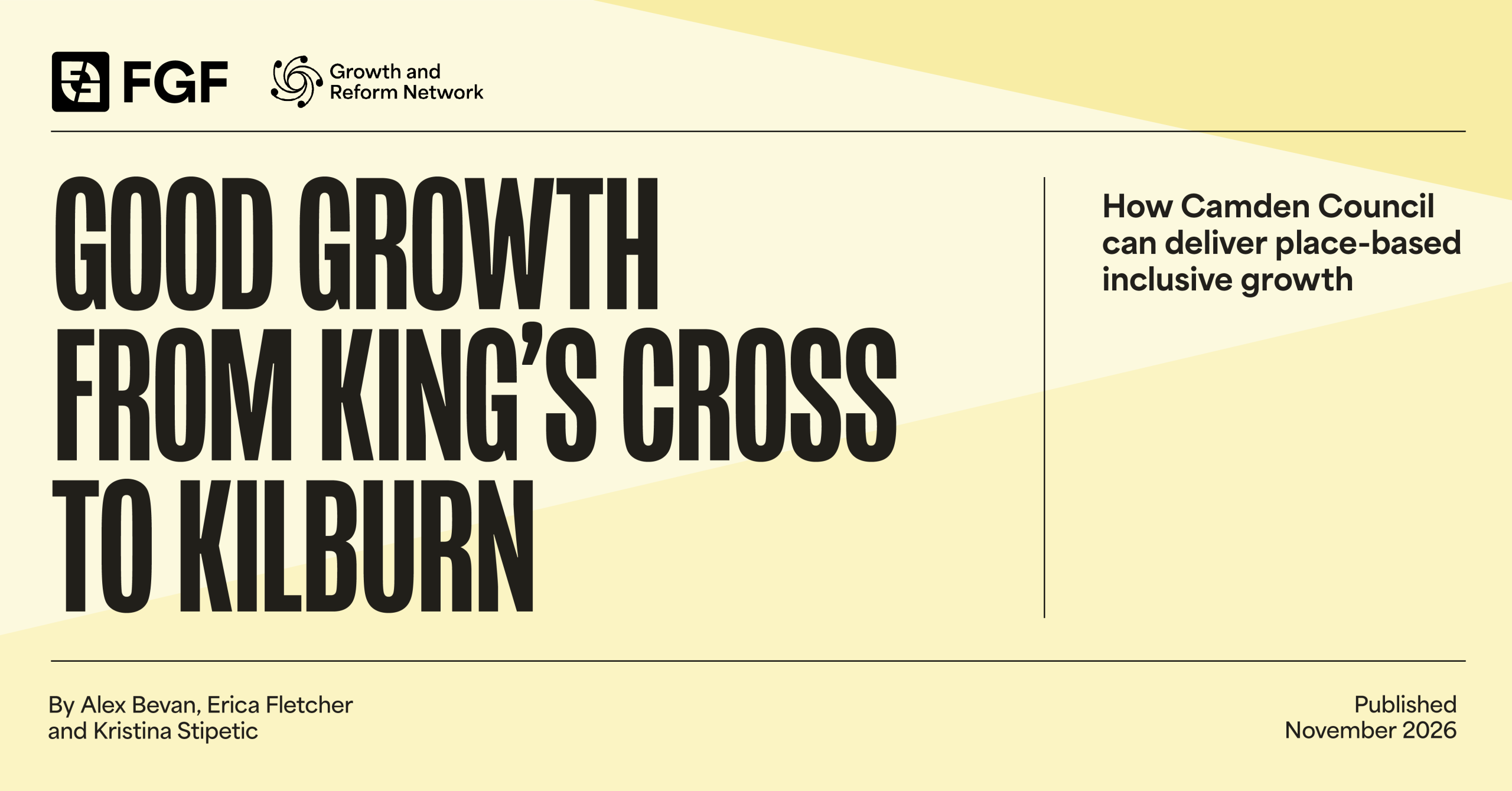
Today, The Future Governance Forum is publishing a new report to help them develop that strategy. We think that Camden could become a model that other local authorities across the country look to for inspiration: a place that translates its strong economic potential into good growth in every postcode of the borough. With its new leader, James Slater, recently appointed, the council has a real opportunity to hit the ground running.
Our report — Good Growth from King’s Cross to Kilburn: How Camden Council can deliver place-based inclusive growth — sets out three ways Camden Council should approach inclusive growth.
First, the council needs to play a stronger ‘orchestrator role’ across the borough. Given its ability to convene partners from across the public, private, voluntary, community, faith and social enterprise sectors, the council is uniquely placed to set a clear, shared overarching direction for the local economy. By setting that direction and intervening where necessary to ensure different actors are aligned, the council can turn inclusive growth into a reality for residents.
Secondly, the council should give residents and businesses the opportunity to feed into the inclusive growth strategy. This will allow the council to align the strategy with the genuine experience and needs of people across the borough. Doing so could help it deliver improvements to the issues people care about such as access to jobs, career progression and fair pay that insulates them against the increasing cost of living.
Finally, the council must tell a compelling story that mobilises people around the end goal. Policy interventions are only half the battle when it comes to reshaping the local economy; communicating the right message is the other. A compelling narrative will help turn a term that many across the borough will struggle to connect with – inclusive growth – into something relevant, immediate and galvanising.
The challenge now for Camden Council is to translate its significant potential into growth felt across the entire borough. And done right, offer a blueprint that local authorities across the UK can follow.