
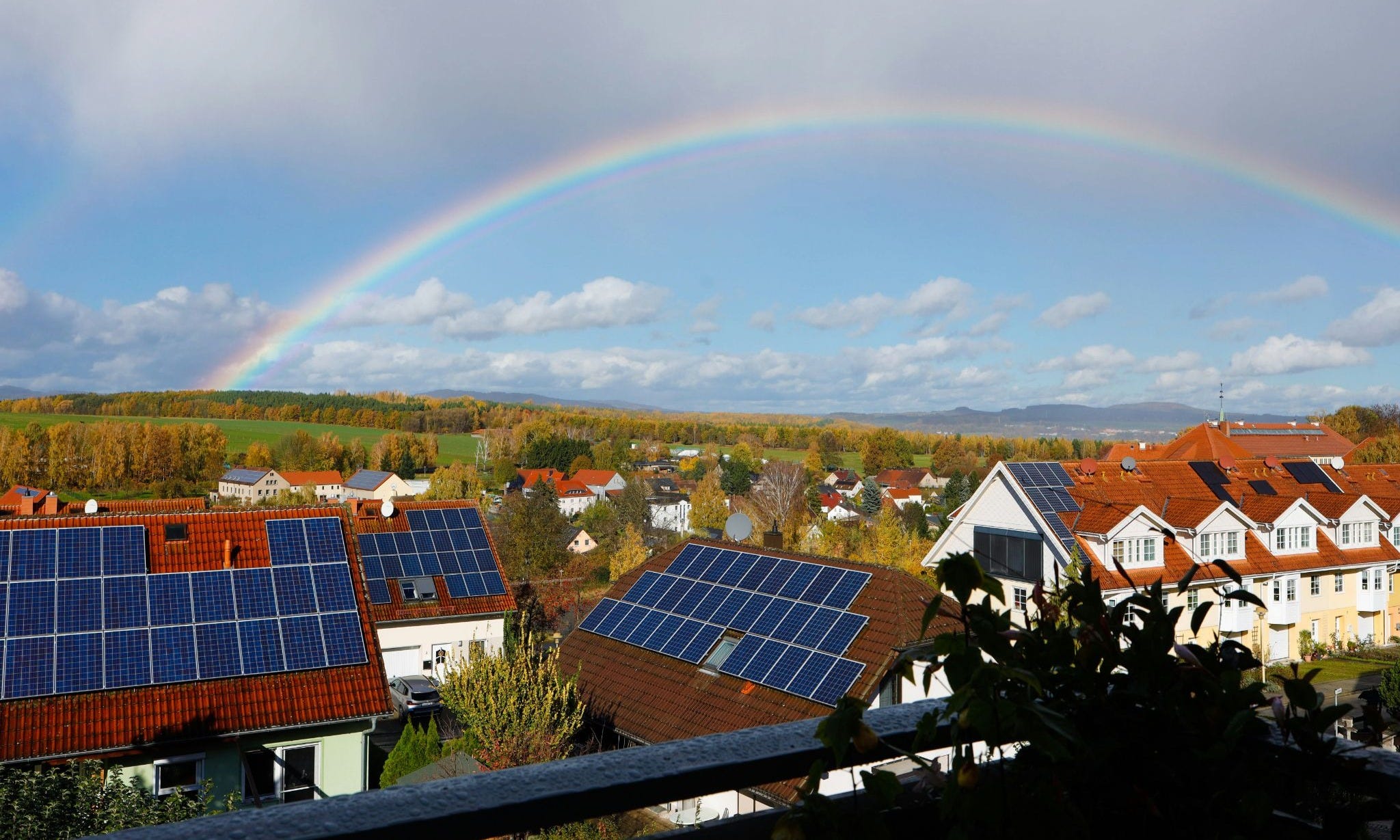
Photo credit: Lara John on Unsplash
The sight of a swarm of drones attacking an electricity substation in Sky TV’s The War Game, cutting power to 600,000 homes and GCHQ North, offered a sobering glimpse of modern warfare. Thankfully, the scenario was fictional; the underlying threat to Britain’s Critical National Infrastructure (CNI) is anything but.
Just last month, intelligence tracking Russian vessels near the UK coast exposed their ongoing efforts to map undersea power and data cables. One coordinated strike on these centralised energy pipelines could instantly disrupt hospitals, transport, and communications across the UK.
Stories like this are beginning to build awareness of the urgent need to strengthen resilience in our energy network. In recent months, former National Security Adviser Lord Ricketts has raised the alarm on the UK’s lack of preparedness to cope with these kinds of attacks, and the Defence Secretary has launched the ‘Be Ready’ campaign, kickstarting a national conversation on resilience.
These warnings are well placed. The last great war to hit Europe occurred in the age before we relied on national grids with centralised infrastructure. Nowadays, modern drones are capable of striking our energy substations and other well-documented public infrastructure, potentially disrupting hospitals, water, communications and transport with one coordinated strike.
But there is a path to greater resilience, and clean power has an important role to play. In the context of modern warfare, this means building national security around a more distributed energy network, with power generated and stored across millions of locations rather than concentrated in a handful of vulnerable sites. Done right, this approach could allow government to strengthen both our social and national security at the same time.
Thanks for reading! Subscribe for free to receive new posts and support our work.
A civil defence asset
A distributed energy network offers more resilient systems that drones cannot quickly destroy. Distributed, in this context, means electricity and heat that is produced and stored across millions of locations that are much harder to attack or damage. By embracing solar power and battery storage, the UK could use power generated in our homes, public, community and other buildings to better secure our Critical National Infrastructure.
This shift has very little added cost, too. The necessary technology – including solar panels already being deployed through the Clean Power Mission – is already on its way, bringing massive added value to the country.
Analysis by Ember shows that solar and battery systems can currently meet the demands of critical infrastructure for two thirds of the year (or 5,800 hours), which has a meaningful impact on reducing backup power requirements. This could increase beyond 7,000 hours a year if local wind power was also used, reducing the need for diesel-fueled backup by 80%.
Right now, the dual use benefits of rooftop solar and battery power are not being treated as a defence asset. The market is currently building much of the physical hardware that is needed, but there is no incentive to connect distributed infrastructure to resilience. A civil defence approach could support this priority so that a distributed energy infrastructure is both a means of decarbonisation and an additional layer of national security.
Lessons from Ukraine
The war in Ukraine is demonstrating these lessons in real time. After losing significant generation capacity to targeted strikes, Ukraine is pivoting to distributed energy, backed by tax exemptions and zero-interest loans for domestic solar and storage. In Kharkiv, a children’s hospital now uses solar backup for uninterrupted operations, showing the impact this approach can have. For Kharkiv’s mayor, it has become a ‘beacon of resilience’.
The story in Ukraine teaches us in stark terms that slowing down on domestic clean power could make us more vulnerable. The lessons for other countries are clear and urgent.
Firstly, we must start designing resilience into the electricity system before a crisis. Emergency backup gas power generators will be needed, but they are nowhere near sufficient in the face of an attack. Now is the time to design a system that stands the best chance of meeting that specific test.
Secondly, we need explicit energy-continuity plans for critical infrastructure. Local and national decision makers will need to work together on local resilience planning to identify essential power users, determine minimum operating requirements and test alternative supplies. Councillors, Mayors, First Ministers and UK Ministers all have a role to play in this.
And thirdly, we must deploy distributed solar and batteries to lower the risk, building a more comprehensive programme of installation that treats solar and battery as dual use infrastructure capable of enhancing resilience. They should form part of a wider strategy, overseen by the National Energy System Operator (NESO), including storage, fuel availability and demand management.
To deliver this at scale, GB Energy should connect the Warm Homes Plan with these outcomes. Rather than developing brand new unfunded policy, there is an opportunity to broaden the scope of GB Energy and the Warm Homes Plan to build resilience now. This would involve additional investment, but it would be marginal in relation to these existing funds.
Electrification and resilience
Resilience is not just about keeping generation going. It is about reducing the number of essential services that depend on a single supply route or centralised system. Electrifying heating, alongside the expansion of distributed electricity generation and storage, offers an opportunity to do both.
Heat pumps, district heating networks that use geothermal and minewater heat, also have an important role to play. This is not about abandoning national networks, which will remain essential. It is about creating a system with more options when parts of it fail, so that a disruption to one network does not cascade through homes, hospitals and other critical services.
The solar rollout
Energy infrastructure can be incredibly slow to progress, but rooftop solar and storage do not need years of planning, design and commissioning – they’re quick to install. Solar and battery technology costs have also fallen dramatically in recent years, including a 9% decrease in the last 12 months.
Solar and storage could also have a major impact on household bills. They usually reduce electricity bills by around 60-80% and require no investment in new power lines. On top of this, distributed energy generation reduces exposure to international energy-price volatility, helping to insulate more families from sudden price hikes.
Some of this is happening already. GB Energy’s Strategic Business Plan includes work with devolved leaders to develop Smart Local Energy Systems that could build resilient community grids, ensuring critical facilities can maintain essential services even when the wider electricity system is disrupted. On top of this, under the Clean Power 2030 action plan, £30bn/yr of capital is expected to be deployed for electricity generation and storage. Realising that value will require a place-based approach that employs local knowledge and decision-making to ensure it resonates at a community level and connects to wider economic outcomes.
The Costs of Resilience
No energy system design comes without trade-offs. This equipment requires upfront investment, which puts it out of reach for many households and businesses. The Warm Homes Plan and GB Energy exist to help address this barrier, but those budget lines are facing huge pressure.
Designing batteries and local energy systems for resilience, rather than simply for everyday savings also brings extra costs. That investment needs to be weighed against the value of keeping homes, hospitals and essential services running during a crisis. Lower electricity bills can help offset the upfront costs, while batteries can also reduce pressure on the wider network and potentially reduce future grid costs.
Electricity network costs will still need to be shared and the grid needs massive private investment in order to remain secure. If lots of consumers draw less energy from the grid, those costs need to be recovered in a way that doesn’t drive up bills. Again, electrification is a major part of the solution because electric heating and transport, drawing from an increasingly clean grid, can spread the cost across consumers. In the meantime, distributed generation, storage and flexibility can help manage demand more efficiently.
Community batteries also do not need to rely on Chinese software and should be protected from any such reliance. Europe is investing heavily to create a stronger manufacturing base for products, and the UK shares an interest in making that happen. It will be important that EU-UK talks resolve the barriers to accelerating our ability to scale up production and invest in the innovation that can reduce costs.
China’s dominance in the supply chain has been allowed to develop in part because we have not treated our energy system as a security asset. The scale of the threat facing our CNI means it is time to invest in solutions rather than putting off this dilemma; resilience is not free but neither is vulnerability.
Security Starts at Home
In British politics, there are few more totemic and emotive matters than the relationship between the individual and their home. Some may feel comfortable with the idea of their home forming part of our national infrastructure. Many will be less convinced.
This proposal is also about control, though, offering households the chance to act on the global uncertainty that can feel overpowering. ‘Security Starts at Home’ could be a powerful message in this context: a message that combines the prospect of lower monthly bills with a deeper assurance that domestic security simultaneously feeds into national security.
The government has an opportunity to act now and build momentum behind this agenda. But time is of the essence, because hostile actors won’t wait around.
Thanks for reading! Subscribe for free to receive new posts and support our work.
