
By Dan Corry, Chief Economist at The Future Governance Forum. Originally published in Public Finance.
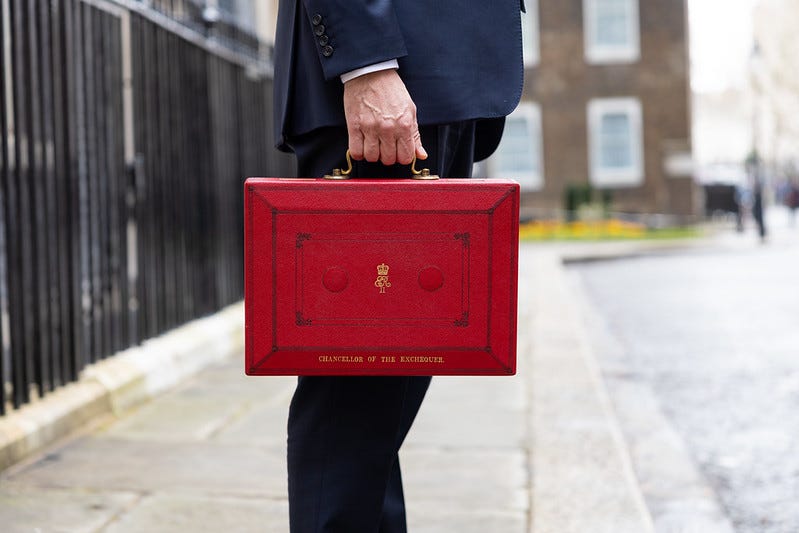
Everyone knows that chancellor John Healey has a tough job with his first Budget. He may be short of cash, but he’s not short of advice and warnings of all kinds.
Some are pretty optimistic, acting as though we don’t have debt currently at around 94% of GDP, with a massive debt interest bill to pay each year and nervous bond markets (who are powerful players whether we like it or not). Others are gloomy – not least due to the winds of chaos blowing around us, from the Strait of Hormuz to the droughts we are experiencing – and want a ‘steady as she goes’ Budget.
But being ultra cautious is not the best way ahead. It’s true that the chancellor’s room for manoeuvre is limited, but that does not mean he cannot be radical. There are three things he could announce tomorrow that we’ve been working on in recent months: go further and faster on redistributing power out to England’s mayors, unlock innovation in every corner of the country, and transform the state so it’s best placed to drive the government’s growth agenda and, crucially, to track delivery against ambition.
Thanks for reading! Subscribe for free to receive new posts and support our work.
More powers for mayors
First, the chancellor should turbocharge the move to powerful, growth-creating mayors. Lots has already been done, but the momentum must continue.
England’s mayoral authorities – now dubbed ‘strategic authorities’ – should be given more power over expenditure and control over multi-year budgets, going yet further in the direction the government has already mapped out. More funding – including capital budgets and elements of the National Wealth Fund – should be devolved to regional and local government to enable local leaders to make the right decisions about investment for their area. And the chancellor’s forthcoming ’road map’ for fiscal devolution should be a serious and ambitious document. Getting these steps right is crucial if strategic authorities are to be incentivised towards growth and are able to finance some of their plans without constant recourse to the Treasury.
On top of this, mayors should play a leading role in getting Britain building again and fixing the country’s crumbling infrastructure. The chancellor should use the Budget to give the green light for mayors to enter into their own mayoral infrastructure investment partnerships. These would use a progressive public-private partnership model – building on successes in Wales and Australia – to finance the infrastructure that places need in a way that delivers for the local economy and community. This type of PPP – which is very different from the PFI model – can be very cost effective and help channel in much needed private capital at a time when funding is tight.
Unlocking innovation
Second, John Healey should take action to unleash the innovative potential across the UK. As Andy Burnham and Gordon Brown argued at the ‘Innovation Nation’ summit in Manchester earlier this month (which we hosted with The Growth and Reform Network and Metro Dynamics), Britain has been the world’s innovation nation before, and we can be again. We have exceptional scientific and research capability, world-leading scientific institutions and universities, and major concentrations of industrial capability. The chancellor should unleash this potential.
But to truly make the most of our country’s potential, we need a new focused effort to get financing and support to those groups who are traditionally ‘underinvested’. That means giving more support for women entrepreneurs, business leaders with disabilities, ethnic minority entrepreneurs, and to those without the bank of mum and dad to help out. To do that we recommend targeted use of the British Business Bank’s £400m Investor Pathways Capital programme. An extra £50m spent on a youth enterprise scheme would also help young people on universal credit start their own businesses.
Driving and tracking the growth agenda
Finally, the prime minister and chancellor must show how focused the government is on growth by using the power of the state to drive the agenda and then hold itself accountable for success. The new National Economic Council should meaningfully push everyone to focus on growth – the way the Gordon Brown’s version did – and not just become a talking or lobbying shop. The revised Treasury Green Book guide for investment appraisal should now be used in ways that support growth outside the traditional hotspots of London and the South East. And Healey should establish a Growth Investment Tracker to shine a light on how the most growth-friendly forms of public investment are currently spread across the country and ensure that in future they are much better targeted towards national and regional growth.
At a time of such straitened financial circumstances, the chancellor needs to implement solutions that do not require massive spending. None of these three proposals carries a heavy price tag – and because they are clearly growth-enhancing, they will be positive for the UK economy in the years to come. If John Healey uses his Budget to deliver the big changes we are recommending, he will be one step closer to ‘good growth in every postcode’.
Thanks for reading! Subscribe for free to receive new posts and support our work.
