The government has committed to named community sponsorship. Designed well, it could do more than strengthen refugee protection — it could devolve real decision-making over migration from Whitehall to local communities.
I still remember the moment sponsorship ‘clicked’ for me.
It was in a small community café in West Wales, sitting with a group of people brought together by shared purpose rather than shared background: a retired social worker, two English teachers, a former United Nations High Commissioner for Refugees (UNHCR) staff member and an Arabic speaker. Different careers, different life experiences — but the same commitment to their community and the same desire to extend that sense of belonging to someone new.
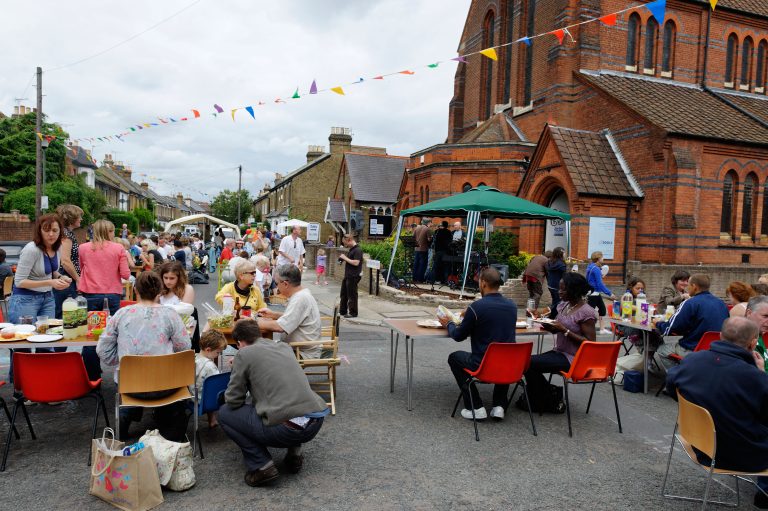
They weren’t ‘just’ volunteers. They were a community pooling their skills, time and networks to do what communities are uniquely good at: welcoming people and helping them build a life.
At the time, I was a Home Office official working on the UK’s first community sponsorship scheme, launched in 2016 in response to the Syrian conflict. It showed what was possible. But it also revealed what was missing.
The missing ingredient: agency
The original scheme relied on government matching — UNHCR selected refugees and government officials connected them to community groups. In moments of crisis, this generates real public support. But it struggles to convert that support into actual arrivals, because government becomes the intermediary between welcomers and newcomers — an inventory problem that is often slow and hard to scale.
Named sponsorship takes that bottleneck out of the system. It allows local groups – such as faith organisations, sports associations, or even groups of friends or colleagues – to choose, welcome and support refugees to settle and integrate into their communities. When a community has already identified the person it wants to welcome, the match exists before government administration begins. That is partly why Homes for Ukraine — essentially a named sponsorship model — operated at significant scale and speed. And unlike many matching models, a well-designed naming scheme can sustain itself between crises, maintaining community networks and readiness, while scaling rapidly when a new crisis demands it.
But this is about far more than programme design. It is about who has a voice.
Over the past decade, one question has kept building from community groups, faith leaders and local organisers: “Why can’t we have a say in who we want to welcome?”
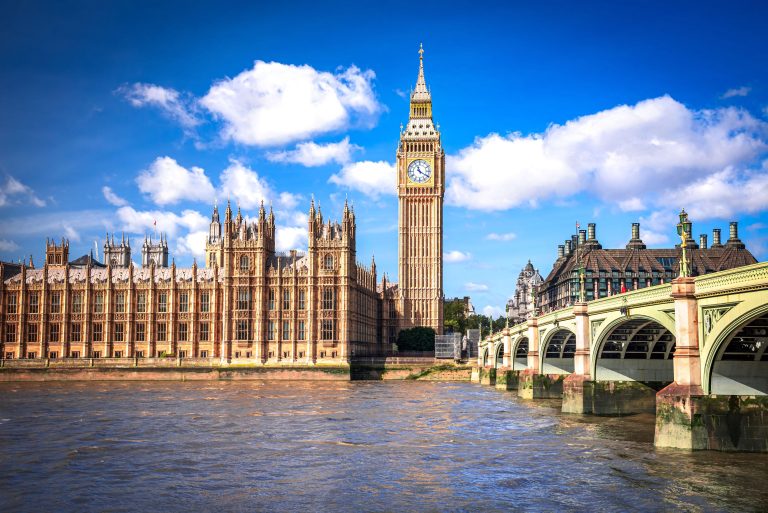
That question goes to the heart of one of the most contentious issues in British politics. For many people, frustration with migration is not about numbers — it is about agency. Decisions made in Whitehall, imposed on communities rather than shaped with them. Community sponsorship offers a fundamentally different model. Not imposition, but partnership.
What is named community sponsorship?
At its most simple, named sponsorship means communities can identify a specific person or family they want to welcome — provided that person meets protection criteria set by government, and the community commits to supporting them when they arrive.
Government sets the rules, carries out security and health checks, and retains control over who can come to the UK. But communities have a real say in who they welcome and how. It is a partnership that redistributes power without removing accountability.
A route that is controlled — and can be trusted
This is one of the most controlled forms of migration there is. Eligibility criteria are set centrally. Checks still apply. People only arrive where a community is ready to support them and crucially, sponsors arrange accommodation and plan for integration before a family travels, reducing pressure on housing and removing reliance on hotels. In a system under strain, that transparency matters.
But community choice has to be meaningful. If eligibility is drawn too narrowly — limited to those formally referred through UN processes — it excludes many people the public would instinctively recognise as needing protection. A broader “protected person” approach, covering those displaced by conflict or persecution, better reflects both reality and public expectation. Government sets the criteria. Within that framework, communities choose.
The ripple effects
Sponsorship does not only change outcomes for those who arrive. It changes the communities that welcome them. Research consistently shows strong results — high employment, fast language acquisition, strong local ties. And when people come together to sponsor someone, they also build relationships with each other and across communities — strengthening the local networks and social ties that make places work. That kind of lived, visible, practical experience does more to shift perceptions of migration than any messaging campaign.
What needs to happen now
The government’s commitment to named community sponsorship is a genuine milestone. But delivery will determine whether it succeeds.
Government’s role is to set the enabling framework — clear eligibility criteria the public can recognise, a robust process that maintains confidence, and early clarity so communities that are ready to welcome are not left waiting while momentum drains away.
But government cannot deliver sponsorship on its own. It requires a whole-of-society approach: strong civil society infrastructure to train and support sponsors, and private sector and philanthropic investment to build that infrastructure to scale.
Done right, named community sponsorship becomes a practical mechanism for devolving real power over one of the most contested areas of public policy — from Whitehall to local communities. That is how you begin to rebuild public consent in migration: not through top-down instruction, but through community choice, control and consent.
Back to that café
I often think back to that group in West Wales. They didn’t need to choose who they welcomed — the crisis was enough to bring them together. But they showed what happens when a community decides to act: confidence, commitment, and a welcome that no government programme could have delivered on its own.
Community welcome like theirs remains essential. But adding choice expands the reach of protection – drawing in communities who might not otherwise step forward. And increasingly, those communities have been asking the same question: why can’t we have a say in who we welcome?
Named community sponsorship is the answer. And if we take it seriously — if we design it well and invest in the communities ready to deliver it — it could unlock something that group in West Wales already knew: that welcome works best when it belongs to the welcomers.